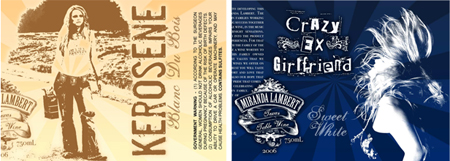
We don’t know much about Miranda Lambert, but we liked the looks of these labels. The graphic designer did a nice job of making them visually interesting, in our opinion. These Texas table wines would not be nearly as tantalizing without this impressive culmination of fonts, word choices, and graphics. This article says the singer is actively involved in running the winery, and it shows. She’s pretty busy for a 24 year old, with a winery and various Grammy Award nominations, and this e-commerce site for wines. She is nominated for Female Vocalist of the Year and performing on the CMA Awards in two days on ABC. On the technical side, the Kerosene COLA shows that TTB requires a bit more space around the Government Warning.
Search Results for: ttb
Tomato Wine
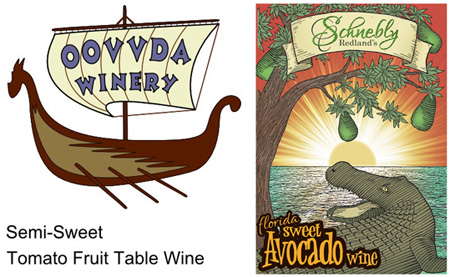
Fred Franzia likes to say he can make good wine from grapes grown just about anywhere. These two labels tend to show he could also make wine from just about anything. This tomato wine seems to decide the age-old question of whether a tomato is a fruit or a vegetable. TTB classified it as a “table fruit wine” and the winery itself says it’s made with “only the finest fruits available … ” Along the same lines, here is an avocado wine, vinted and bottled in Florida. TTB classified it as a “table fruit wine.”
Hoppy Holidays: A Collection of Winter Beers
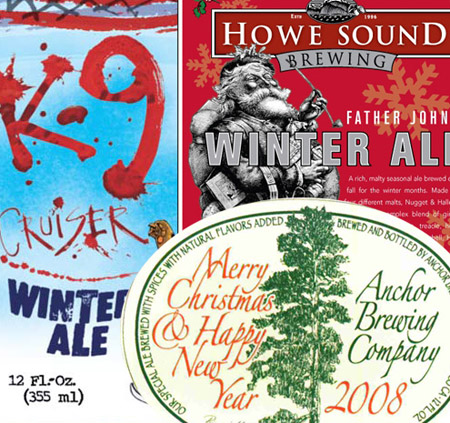
A number of cues suggest the winter holidays are upon us: shorter days and colder weather, stores decorated with Santas and snowflakes before Thanksgiving, and seasonal winter beers. Here are three examples of winter beer labels, including the new Anchor seasonal label, which changes yearly. Amongst seasonal beers, winter beer appears to be the most prevalent, with over 100 TTB label approvals in 2008 alone. See three recent label approvals here: Anchor Brewing Merry Christmas, Flying Dog K-9 Cruiser, and Father John’s Winter Ale.
How Evil is Your Brew?
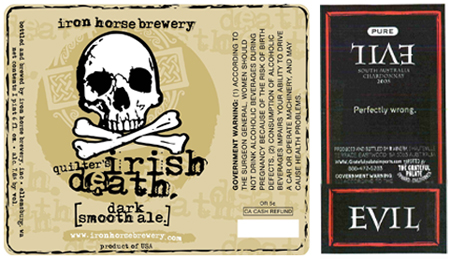
It’s 2008. Table wine is still evil? Apparently so. Just like there are a shocking number of dog and lizard labels, the TTB database also reveals a humongous number of labels overflowing with “evil” and “sin.” They are virtually in a sumo match for who can be most evil. It’s tough to top a skull and crossbones, as in the Irish Death Ale label above. But then, it makes no claim to be pure in its evil ways, and so the Grateful Palate rises to the occasion yet again to bring us unmitigated, Pure Evil. It is a South Australia Chardonnay that is “Perfectly wrong.”
1792 Ridgemont Reserve
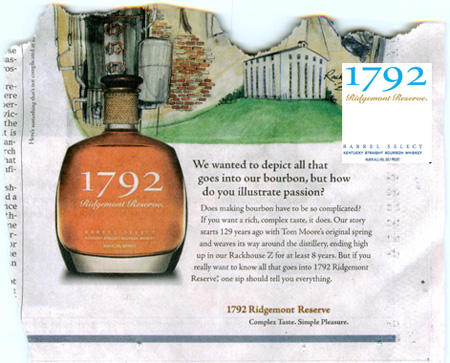
TTB frequently says vintage dates are not allowed on spirits. The rationale is: subtle vintage characteristics do not survive distillation, and it is usually misleading to suggest otherwise. This bourbon label shows a prominent date, but seems to refrain from using the “vintage” term. The back label explains that 1792 is the year when Kentucky became the 15th state. The ad is from the October 24, 2008 Wall Street Journal.
To Flame or Not: Czech Absinthe Hits the US
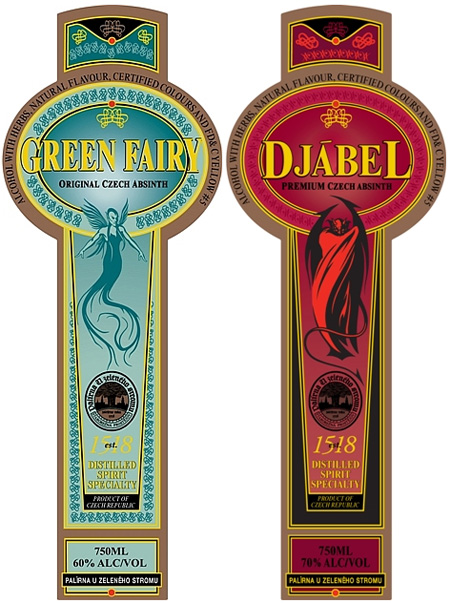
During the past 20 months TTB has approved several dozen absinthe brands. Almost all are produced in Switzerland, France, and the US — points west of the Czech Republic. Above shows two of the earliest-approved products made in the Czech Republic, approved a few days ago. This is significant due to a long rivalry between Czech and non-Czech absinthes. The Czech products are somewhat different, and these Stromu products show it well: they have added flavors rather than herbs added before the final distillation; the proof is somewhat higher; Djabel suggests lighting the product on fire (back label). The latter is frowned upon by most other producers, to put it mildly. We would also expect many absinthe brands to fight over the trademark rights to the Green Fairy name; this term has long been applied to numerous absinthes all over the world. Here is a list of the first 20 or so absinthe products approved for US sale.
This also shows the massive leadtime sometimes required to bring an alcohol beverage product to market in the US. For Djabel: the importer got formula approval on July 11, 2008 (see item 11 on Djabel COLA); the importer probably applied for formula approval 1-2 months earlier, in May or June of 2008; TTB rejected a label submitted on August 8, 2008 (see item 18.d.); the importer resubmitted the label on September 3, 2008 (see item 20); and TTB finally approved the label on October 23, 2008 (see item 23). This is 5-6 months of hard work with many opportunities for missteps.
Finally, this well demonstrates the recurring trend, to portray alcohol beverages and especially asbinthe as sinful. Djabel’s back label says:
Djabel means “devil” in Czech. … During the dark-ages Bohemian “witches” and pagan worshipers used potions distilled from local herbs including wormwood (artemisa absinthium) as healing tonics and for social rituals. … please serve responsibly the traditional way by flambeing sugar in a spoon …