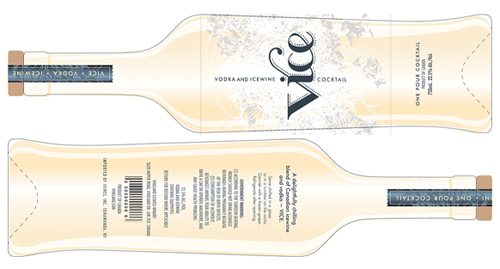
This approval shows a tremendous amount of change in eight short years. First of all, it is hard to imagine that the Bureau would ever allow the term “vodka” on a beer label. Somehow I don’t think that would fly in this day and age. Further, the qualification seems to mandate the use of this term, in a particular way. The qualification suggests that the arrangement of the words may lead to controversy, rather than the reference to vodka and a famous vodka brand on a beer label. Pages 12-22 of this document show the controversy.
Second, the product is gone. So is the named agency (that is, the label functions have moved from ATF to TTB). So is the person that approved it. Judy was tremendously helpful and probably had many good reasons to approve this label, in a different era. I wouldn’t want to mention the person, but for the fact that the name is right there and the memories are good.
This is also a good example of a “use-up.” The approval tends to say the label is not ideal but the agency will allow it to be used for six months only. I believe TTB/ATF has allowed use-ups for many, many decades. It is difficult to imagine other agencies allowing this privilege, such as FDA allowing a dubious label but only for a few months, or Customs allowing a dubious origin statement for a few more months. For these reasons, I wanted to highlight the label before it fades further into history.
Search Results for: ttb
Keg Wine

It’s a good thing TTB never got far with the proposal to ban non-traditional containers. Otherwise, we wouldn’t have beer in boxes, spirits in a skull, nor the wine in steel kegs above.
From the looks of this approval, Jordan Kivelstadt plans to pack high-end wines in 20 liter refillable kegs. His website says:
Free Flow Wines is the first wine company dedicated to producing draught wines. We produce premium wines and “bottle” them in sustainable, stainless steel kegs, for restaurants, bars, and catering companies.
Apart from Free Flow and JK Cellars, Jordan is the winemaker at Pavo Wines. The Pavo site explains that in a few short years since graduating with an engineering degree, Jordan has worked at wineries in Sonoma, Australia and Argentina.
Adult Beverages

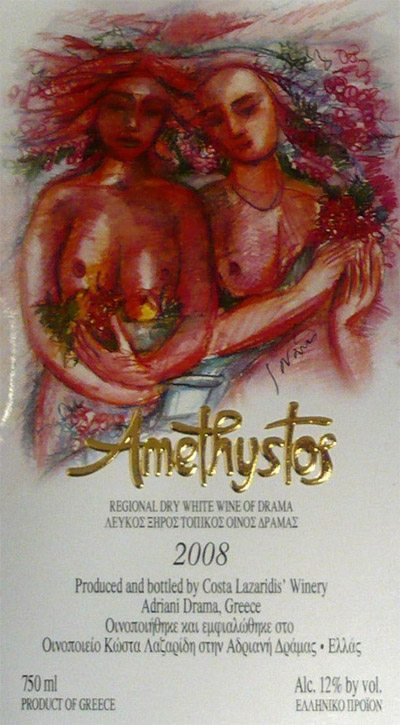
Here it is, in all its glory, at long last. TTB’s “areola” policy.
From time to time, depending on the circumstances, TTB will say these particular body parts are “obscene” or “indecent” and must be covered. Here is a recent example of such a rejection. It says “Please cover the areolas on the woman.” And these, by way of another example, are certainly well covered.
The label above is Amethystos dry white wine, from the Drama region of Greece.
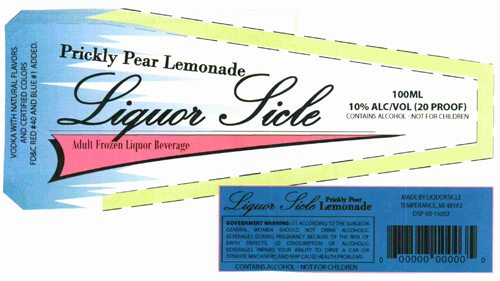
Liquor Sicle

This Liquor Sicle label features a prominent reference to “Liquor.” This has become rare. Where did the term come from, and where did it go?
The Online Etymology Dictionary defines “liquor” this way:
early 13c., likur “any matter in a liquid state,” from O.Fr. licour, from L. liquorem (nom. liquor) “liquid, liquidity,” from liquere “be fluid.” Sense of “fermented or distilled drink” (especially wine) first recorded c.1300. To liquor up “get drunk” is from 1845.
It is semi-ironic that this term is being applied to one of the few TTB products that is not intended to be consumed in a “liquid state.” From way back in 1892, here is a court struggling with the term, and trying to find the distinction between beer and liquor.
In a further irony, the term is probably used more commonly, these days, on malt beverages (such as Colt 45) compared to distilled spirits. “Malt liquor” goes back to at least 1937, and Alvin Gluek secured a patent on it in 1948.
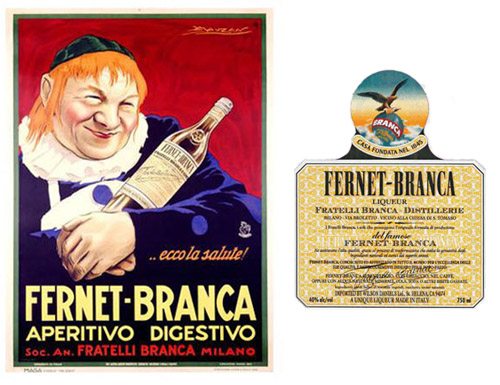
Remove the Word "Digestif"

Fernet-Branca has been well known around the world as a “digestiv” since about 1845. The above poster shows Fernet-Branca described as a “digestivo.” By contrast, the US label, on the right, bears no reference to this key term.
TTB does not allow any reference to digestif, digestiv or similar. Here is an example of a recent rejection, wherein TTB explains that the term is not allowed, and why. TTB regards it as a therapeutic claim.
Eric Asimov explains:
Digestives were historically intended as palliatives, meant to counter all sorts of ailments and physical imbalances. They may no longer be assigned quite the same medicinal value today as they were a few hundred years ago, but count me among the many who believe they can help to settle that queasy feeling.
Fernet-Branca is one of the more famous examples of a digestif, but there are others, such as Fernet Stock, Escorial, Becherovka, Averna, bitters, amaro, etc. In general, digestifs are intended to be consumed after a meal, with dessert of coffee. By contrast, aperitifs, such as Aperol and Campari, are most often served before meals.
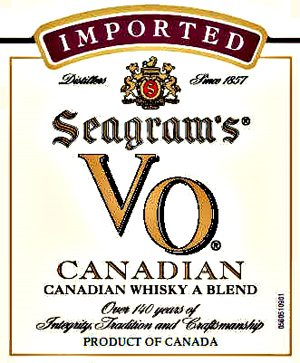
Seagram

The Seagram name still carries a lot of weight, even though the company got obliterated about ten years ago. Wiki says The Seagram Company Ltd. (headquartered in Montreal, Canada) became “defunct” in 2000. Until then it was “the world’s largest producer and distributor of spirits and wines.”
The brands live on. TTB’s database shows more than 500 approvals, with the brand name “Seagram,” within the past three years. This excludes famous brands formerly owned by Seagram, such as Chivas, Crown Royal, Martell, Captain Morgan, etc.
The City of Waterloo’s history makes the point that “like so many success stories,” Joseph E. Seagram’s early success was “almost accidental.” Joseph was asked to look after an Ontario grain mill, back in 1864, while the owner traveled to Europe. The main business was grinding flour. Distilling was a side issue, to use up excess grain, but Seagram began buying out his colleagues and shifting production from flour to spirits. The Bronfman family acquired Joseph E. Seagram & Sons in 1928. In another “almost accidental” quirk of history, “Bronfman” means “liquor man” in Yiddish.
Here is a great song that happens to feature Seagram (in a not entirely flattering light). It is Uncle Lloyd by Darrell Scott. The pertinent lyrics explain:
He and Dad would spend their evening
Sitting in lawn chairs in the yard
Where they’d drink a toast to Seagram’s
Seagram’s never went down hard