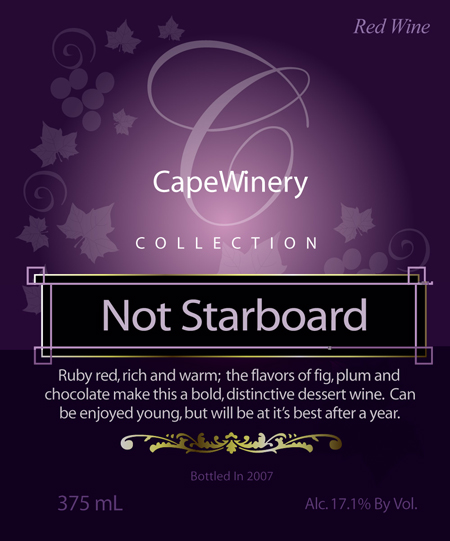
It appears that this winery was not allowed to call their 17.1% alc./vol. dessert wine a Port Wine, because it’s made and bottled in Florida rather than Portugal. But rather than give up and call it something boring, they found a witty but fairly subtle and lawyerly way to get their point across.

… but they misspelled “its” as “it’s.” where was the copy editor?
Not that I would call shenanigans, but there are ports made in the USA.
http://www.deandeluca.com/wine/wine-by-price/35-50-wine/edge-hill-vintage-port-2005.aspx
no, they had it right…”it’s” is correct. grammar 101.
“It’s” is short for “it is”
Here is a California winery dealing with the same issue and proposing a computer-oriented solution rather than a nautical-oriented solution: http://www.thedieline.com/blog/2008/10/usb-port-wine.html.
The term “Starboard” rather than port has been used for many years by the Quady Winery in Madera, CA.
Vintage ports may be aged in barrels or stainless steel for a maximum of two and a half years before bottling, and generally require another 10 to 40 years of aging in the bottle before reaching what is considered a proper drinking age. Since they are potentially aged in cask for only a short time, they retain their dark ruby color and fresh fruit flavours. Particularly fine vintage ports can continue to gain complexity for many decades after they were bottled. It is not uncommon for h-century bottles to still be in perfect condition for consumption. The oldest known vintage port still available from a shipper is the 1815 Ferreira.