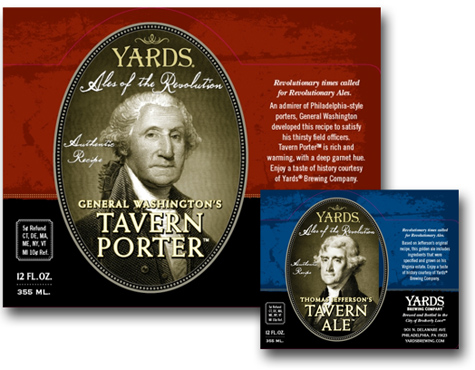
TTB does not usually allow presidents to be shown on alcohol beverage labels, so we were suprised to see George Washington (above) and Thomas Jefferson emblazoned upon these beers. The normal rationale is that it could misleadingly imply that the president endorsed the product. Here, the porter neck label says “Crafted following General Washington’s original recipe.” We see very few Obama beers so far, and we wonder how many TTB should allow — if any. What presidential beers do you think the government should allow?
Continue Reading Leave a Commentpolicy
George Washington's Tavern Porter

Tags: current events, famous, legally interesting/controversial, policy, political
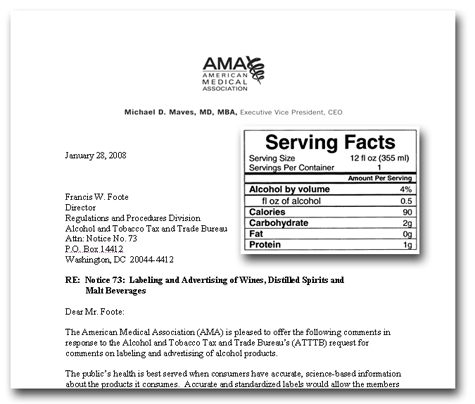
American Medical Association Comment; Top 7 Things to Know

It is likely that all beer, wine and spirits labels will change dramatically in the near future. TTB has been working on new rules since CSPI and other groups submitted a petition in 2003. The new rules would require a “Serving Facts” panel on every container. This panel would include a lot more information, such as the typical serving size, number of servings per container, calories, carbohydrates, protein and fat. Because this is a big, controversial change, TTB has received more than 18,000 public comments during the past few years. There are far too many comments for most people to review, and so we will highlight and summarize the most noteworthy comments here. The most recent proposal and comments are here. This is comment 3 in a series; to see others, click on the “serving facts” tag below.
- The AMA believes “The public desires and deserves accurate information on ingredients and potential allergens in alcoholic beverages.”
- “Consumers are confused about the type and amount of alcohol” in newer products such as wine coolers, “alcopops,” and “high malt content beer products with names and packaging deceptively similar to those of same-brand distilled spirits.”
- Roughly half of all alcoholic beverages are consumed by persons with alcohol use disorders.
- “Serving Facts” should appear in a consistent manner across all labels,...
Tags: policy, serving facts/allergens
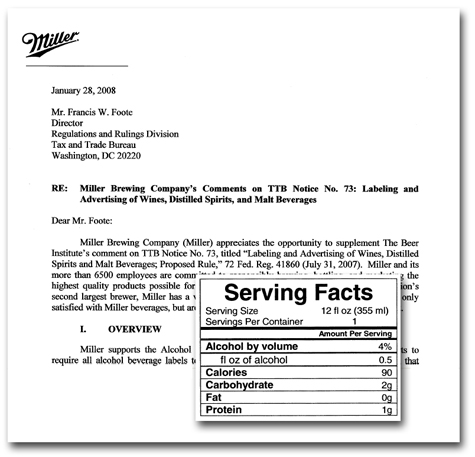
Miller Brewing Comment; Top 5 Things to Know

It is likely that all beer, wine and spirits labels will change dramatically in the near future. TTB has been working on new rules since CSPI and other groups submitted a petition in 2003. The new rules would require a “Serving Facts” panel on every container. This panel would include a lot more information, such as the typical serving size, number of servings per container, calories, carbohydrates, protein and fat. Because this is a big, controversial change, TTB has received more than 18,000 public comments during the past few years. There are far too many comments for most people to review, and so we will highlight and summarize the most noteworthy comments here. The most recent proposal and comments are here. This is comment 2 in a series; to see others, click on the “serving facts” tag below.
- Miller supports the initiative as “appropriate and timely.” This is a not-so-common instance where the big alcohol beverage companies, the anti-alcohol groups, and the government are on the same side.
- TTB should allow the information to be shown in a smaller, linear format, rather than the larger, panel format. It will cost Miller about 14 times more (as much as $39 million) to show the information in the panel format. “The dramatically higher … deployment costs for the panel...
Tags: policy, serving facts/allergens
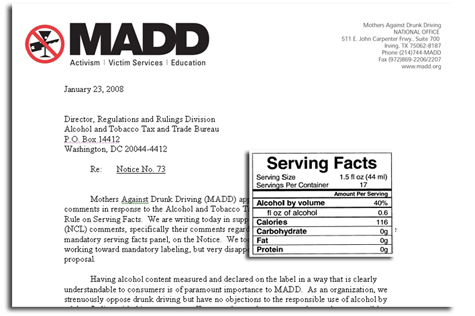
MADD Comment; Top 5 Things to Know

It is likely that all beer, wine and spirits labels will change dramatically in the near future. TTB has been working on new rules since CSPI and other groups submitted a petition in 2003. The new rules would require a “Serving Facts” panel on every container. This panel would include a lot more information, such as the typical serving size, number of servings per container, calories, carbohydrates, protein and fat. Because this is a big, controversial change, TTB has received more than 18,000 public comments during the past few years. There are far too many comments for most people to review, and so we will highlight and summarize the most noteworthy comments here. The most recent proposal and comments are here. This is comment 1 in a series; to see others, click on the “serving facts” tag below.
- MADD has “no objections to the responsible use of alcohol by adults.”
- Thousands die each year due to misjudging (or ignoring) rules of responsible consumption.
- “Standard drinks” labeling will better educate consumers.
- There should be equivalence among beer, wine and spirits, based on a standard drink equal to 0.6 fluid ounces of pure alcohol.
- The facts panel should require a moderation message such as “no more than two drinks for men, one drink per day for women.”
Is...
Continue Reading Leave a CommentTags: policy, serving facts/allergens
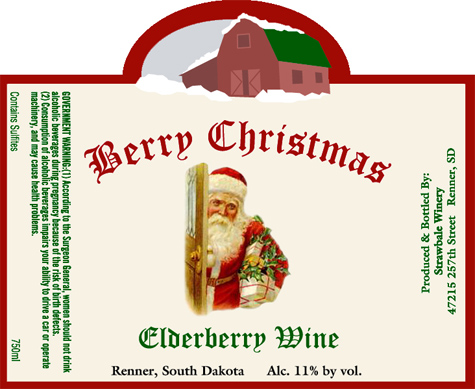
Berry Christmas

There are lots of Santa labels of late, but this one got our attention because it combines many relevant elements in one small place. First, it is elderberry wine, and that’s fairly unusual. Second, it’s made in South Dakota, and that’s not so common. And then there is Santa. We don’t remember seeing so very many Santa Claus labels in past years. This may be because a great many states prohibit references to Santa on alcohol beverage products. The Wine Institute still discourages it, at least in wine ads.
Continue Reading Leave a CommentTags: current events, ingredients, legally interesting/controversial, origin, policy
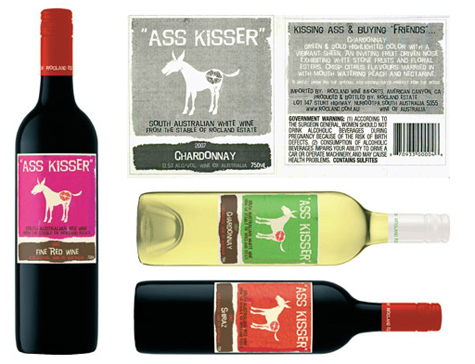
Ass Kisser Chardonnay

Thanks to Barry Strike for bringing this label and controversy to our attention. Barry is a lawyer at Hinman & Carmichael in San Francisco, where he has practiced wine and beverage law for many years. Barry explained:
Continue Reading Leave a CommentIn mid-2008, TTB approved four wine labels with the brand name above. The wines are made in Australia and imported by Rocland Wine Imports, of California. Either TTB is developing a sense of humor or the examiner is an ardent animal lover. (Or perhaps the examiner thought this was an animal husbandry reference?) In any case, this is a good example of TTB’s approval of a label with a brand name that likely would have been regarded as profane a few years ago. Notwithstanding TTB’s apparent embrace of humorous, daring labels, some state regulators are not as enlightened. The state of Michigan recently refused to allow Big Ass brand wine to be sold in the state. Lacking any applicable regulatory or statutory basis for disapproving the label, the state claimed it was racist(?!). The Big-Ass Coalition must have applauded the state’s bold step to protect big asses everywhere.
Tags: legally interesting/controversial, policy, risqué, would you approve it?

