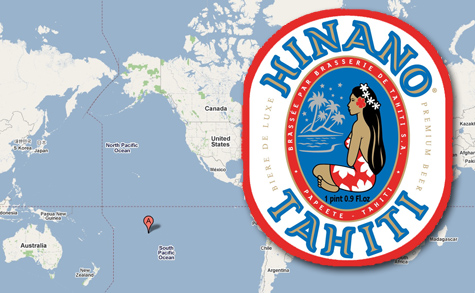

It’s a tiny island, 5,000 miles away from the US (near the pointer). But it’s the source of at least two alcohol beverage products bound for the US market. Hinano Beer (above) is made in Tahiti, French Polynesia and it is imported by mighty Anheuser-Busch. A-B produces and imports a shockingly huge number of alcoholic beverage products — well beyond Bud and Michelob, and this is but one example of the many others. Another Tahitian product is Manuia Tahiti, Passion Punch. The label suggest it is made with a rum base, but TTB’s qualifications suggest that the base is actually distilled from cane and pineapple. The database shows only a few other alcohol beverage products made in Tahiti, and this makes sense because the island is only 28 miles wide.
Continue Reading Leave a Commentorigin
Twistee Rules: Aggregate Packaging

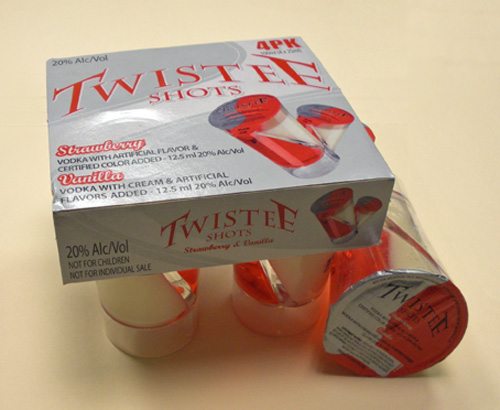
This may look like just another ready-to-drink spirit but there is quite a lot going on here.
- It is two products on one label approval form. Box 19 (of the approval linked above) carefully notes “there are two pre-import letters associated with this product.”
- It is important to sell these in a four-pack because each cup is only 25 ml. TTB does not allow 25 ml. for spirits. When four are joined together, as here, it conforms to the 100 ml. “standard of fill.” These standard of fill rules have been important to TTB for many decades. TTB calls this aggregate packaging.
- To reinforce the aggregation, it is helpful to say NOT FOR INDIVIDUAL SALE.
- Because they are tiny, it is helpful to state NOT FOR CHILDREN. This can help avoid the shame of a Liquid Lunchables designation.
- It is important to put some labeling on the outer pack and some on the inner pack.
The origin (New Zealand) is also a bit unusual for spirits. There are a great many products in the Twistee Shots line, imported by Smart Beverage of Louisville, Kentucky.
Continue Reading Leave a CommentChampagne Battle Spills into Time Magazine

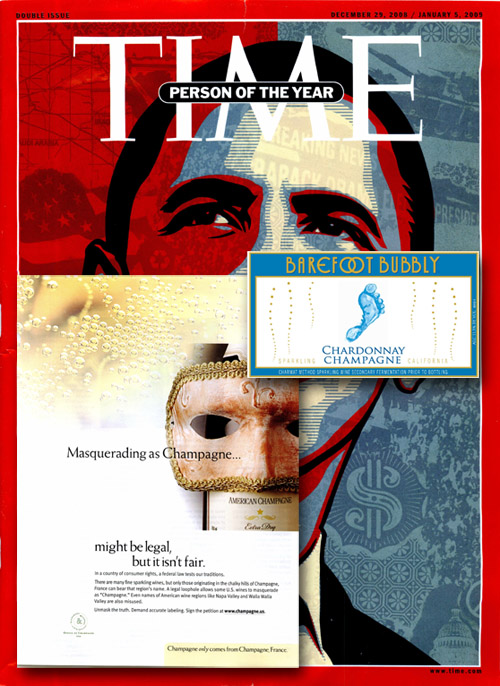
We never thought we’d see a TTB controversy make it into a big ad in the national media — let alone a full page ad in Time Magazine. The yellow ad is on page 69 of the December 29, 2008 “Person of the Year” double issue and it covers the entire page. The French Office of Champagne is not at all pleased that some non-French wines qualify to be called Champagne, under US law. The ad says “Masquerading as Champagne … isn’t fair. … A legal loophole allows” some names to be misused. In 2006, after many years of negotiations between the US and the European Union, and agreement, TTB set forth the current US rule in TTB Industry Circular 2006-1:
Continue Reading Leave a Commentthe U.S. made a commitment to seek to change the legal status of [terms like Champagne] to restrict their use solely to wines originating in the applicable EU member state, with certain exceptions. Because the IRC specifically defines semi-generic names, this law must be changed in order to restrict the usage of the names to wines originating in the EU. Assuming the law is so changed, the Agreement contains an exception to this rule. We refer to this exception as the “grandfather” provision. Under the “grandfather” provision, any person or his or her successor...
Tags: ad, business strategy, international, legally interesting/controversial, origin, policy
Berry Christmas

There are lots of Santa labels of late, but this one got our attention because it combines many relevant elements in one small place. First, it is elderberry wine, and that’s fairly unusual. Second, it’s made in South Dakota, and that’s not so common. And then there is Santa. We don’t remember seeing so very many Santa Claus labels in past years. This may be because a great many states prohibit references to Santa on alcohol beverage products. The Wine Institute still discourages it, at least in wine ads.
Continue Reading Leave a CommentTags: current events, ingredients, legally interesting/controversial, origin, policy
To Flame or Not: Czech Absinthe Hits the US

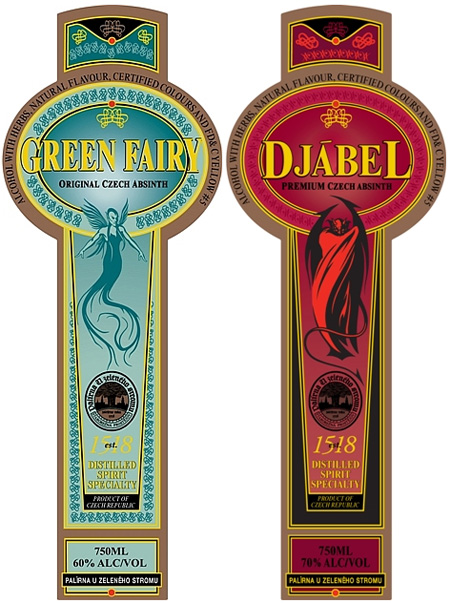
During the past 20 months TTB has approved several dozen absinthe brands. Almost all are produced in Switzerland, France, and the US — points west of the Czech Republic. Above shows two of the earliest-approved products made in the Czech Republic, approved a few days ago. This is significant due to a long rivalry between Czech and non-Czech absinthes. The Czech products are somewhat different, and these Stromu products show it well: they have added flavors rather than herbs added before the final distillation; the proof is somewhat higher; Djabel suggests lighting the product on fire (back label). The latter is frowned upon by most other producers, to put it mildly. We would also expect many absinthe brands to fight over the trademark rights to the Green Fairy name; this term has long been applied to numerous absinthes all over the world. Here is a list of the first 20 or so absinthe products approved for US sale. This also shows the massive leadtime sometimes required to bring an alcohol beverage product to market in the US. For Djabel: the importer got formula approval on July 11, 2008 (see item 11 on Djabel COLA); the importer probably applied for formula approval 1-2 months earlier, in...
Continue Reading Leave a CommentTags: business strategy, origin, sin, trademarks-beverage
How Long Until Cuban Rum?

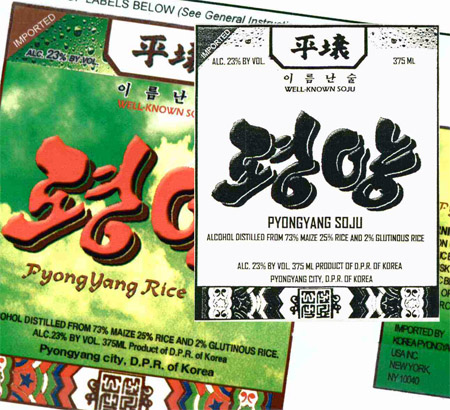
If the US Government is warming up to North Korea, how much longer can it be until Cuban Rum is back? TTB has started to allow a small number of products from North Korea, and the news a few days ago is that this is part of a broader US-North Korea cooperation. Does anyone find the D in DPR a tad misleading? A good trend or bad? We’ll go way out on a limb and foolishly boldly predict that Cuban Rum will be back in the US (legally) within two years, after an almost 50-year absence. The story is documented in this new book: “Bacardi and the Long Fight for Cuba: The Biography of a Cause.”
Continue Reading Leave a Comment

