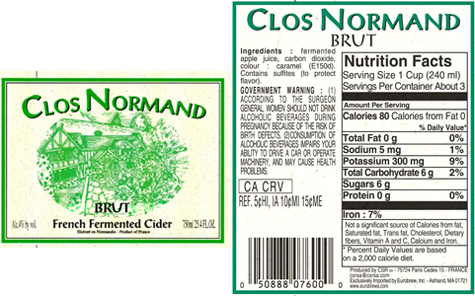
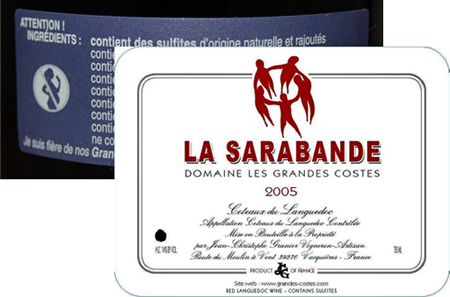
This French Apple Cider provides a small taste of what is coming soon. It is our understanding that TTB has no plans to require or encourage ingredient labeling, such as that on the back label here. But TTB does have big plans to require Serving Facts Labeling (similar to this Nutrition Facts labeling) someday very soon. It’s a big, important change. There is a lot of data on this back label; much of it will be required in a few years and almost none of it would have been required 20 years ago. The Government Warning arrived 20 years ago and redemption labeling (as well as the UPC) started appearing a few decades ago. This COLA is unusual because FDA (not TTB) typically has authority over wines under 7% alc./vol. (such as this cider). But here the importer noted (at box 19) “submitting for review of health warning.” TTB retains control over the Warning and the wine tax, even in those instances where general labeling jurisdiction shifts over to FDA. Some time after approval, TTB apparently decided to hand this back to FDA, as the current status of this approval is “surrendered.”
Continue Reading Leave a Commentpolicy
FDA Cider, Apples and Nutrition Facts

Tags: hybrid, legally interesting/controversial, policy, serving facts/allergens
1792 Ridgemont Reserve

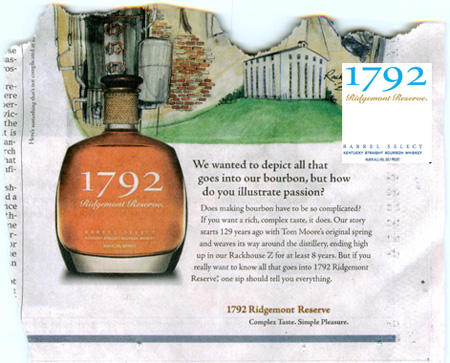
TTB frequently says vintage dates are not allowed on spirits. The rationale is: subtle vintage characteristics do not survive distillation, and it is usually misleading to suggest otherwise. This bourbon label shows a prominent date, but seems to refrain from using the “vintage” term. The back label explains that 1792 is the year when Kentucky became the 15th state. The ad is from the October 24, 2008 Wall Street Journal.
Continue Reading Leave a CommentPregnant Lady Logo

It seems like TTB has eased up on various issues in recent years, and we will try to show this trend in the weeks to come. But there are still plenty of areas where TTB is quite strict. For example, good luck if you want to talk about vitamins or beneficial effects. TTB is also quite strict about the little lady above. She’s not allowed in the US. The blue label is a non-US label. By contrast, on the white label, TTB insisted that the importer obliterate the logo. TTB said: “When new labels are printed, the pregnancy logo must not appear on label and can not appear marked-out with a black marker.”
“We do prohibit the French (or any other country’s) government health warning,” Arthur H. Resnick, spokesman for the U.S. Alcohol and Tobacco Tax and Trade Bureau said in an e-mail. “We feel that consumers are likely to be confused and possibly misled by a proliferation of government warnings.”
From The Washington Post
Continue Reading Leave a CommentHow Long Until Cuban Rum?

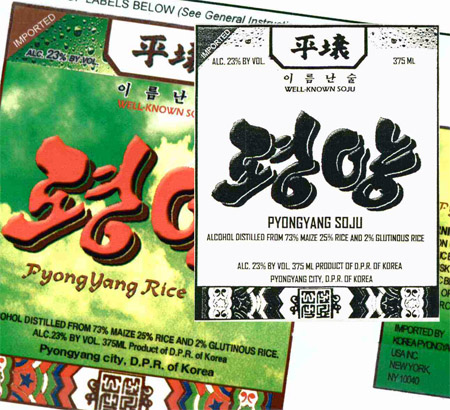
If the US Government is warming up to North Korea, how much longer can it be until Cuban Rum is back? TTB has started to allow a small number of products from North Korea, and the news a few days ago is that this is part of a broader US-North Korea cooperation. Does anyone find the D in DPR a tad misleading? A good trend or bad? We’ll go way out on a limb and foolishly boldly predict that Cuban Rum will be back in the US (legally) within two years, after an almost 50-year absence. The story is documented in this new book: “Bacardi and the Long Fight for Cuba: The Biography of a Cause.”
Continue Reading Leave a CommentChardonnay with Eggs and a Bit of Fish Protein

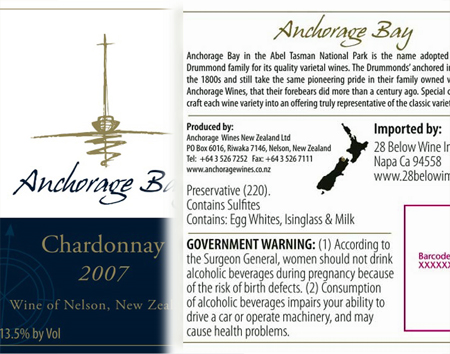
If the above sounds grotesque, you may need to get used to it. Egg whites, fish protein and milk are commonly used in alcohol beverages. New allergen rules may require much more frequent disclosure, on many more labels in the near future. TTB’s qualification says “The disclosure of allergens used in this product is voluntary, pending final rulemaking (See Notice No. 62, 71 FR 42329).”
Continue Reading Leave a CommentTags: ingredients, policy, serving facts/allergens
Not Port Wine from Portugal

It appears that this winery was not allowed to call their 17.1% alc./vol. dessert wine a Port Wine, because it’s made and bottled in Florida rather than Portugal. But rather than give up and call it something boring, they found a witty but fairly subtle and lawyerly way to get their point across.
Continue Reading Leave a CommentTags: international, legally interesting/controversial, policy, writing/witty/funny