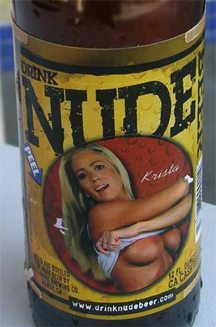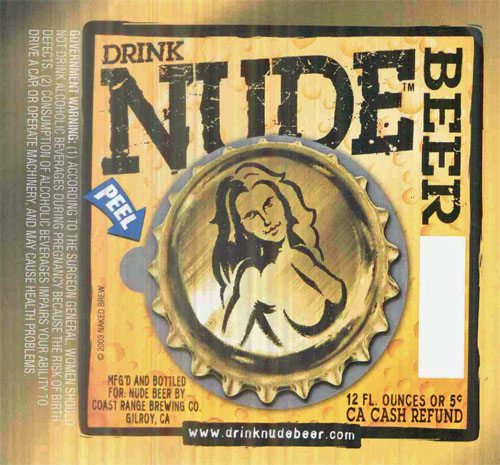
One might assume that beer + naked women is a nearly unstoppable combination. But it did not work out that way for Coast Range Brewing. It looks like the Gilroy, California purveyor of Nude Beer is long gone. Their last COLA was in 2006 and their last Nude Beer approval was in 2004. There is no sign of the company at the web address above. In all, the company got about 23 approvals for Nude Beer before fading away. Coast Range provides a clear lesson that it takes a lot more than unclothed women to sell beer. In case it’s not obvious from the above image, the idea is that you buy the beer and then peel off part of the label to reveal a woman with little if any clothing. A slightly blurred example is at the end of this sentence but don’t click it if you don’t want to see nudity. This kind of stickering is a good option for companies that want to show something more than the government and retailers might otherwise allow. We wanted to capture it before it fades into ancient history. This also shows that the system has a lot of checks and balances, such as the market, and the government doesn’t need to carry the entire...
Continue Reading Leave a Commentpolicy
Nude Beer

Tags: container, functional, legally interesting/controversial, policy, risqué, sexual
Too Much Rum in the Jumbie

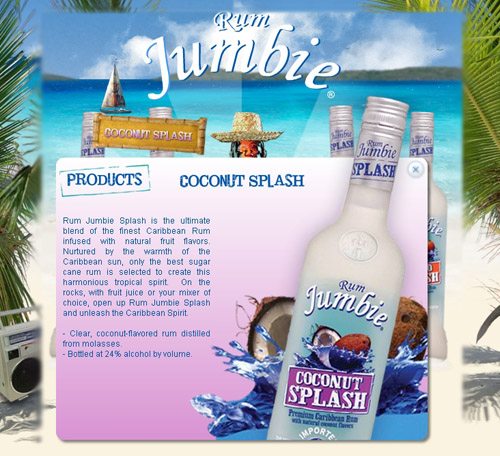
August 28, 2009 was a bad day for Rum Jumbie. In a slew of “approvals,” TTB directed Varela Imports to make “rum” much, much, less conspicuous. TTB said:
When new labels are printed, the word “rum” in your trademark name Rum Jumbie cannot appear more prominent than the Class and type. The [statement of composition] and the words Rum Jumbie must appear in the same color print. … No more use-ups will be granted.
That is, Varela must make their brand name and trademark much less conspicuous because this is not “rum” and the actual designation is “Rum with Natural Flavors.” TTB’s point, essentially, is that Varela is putting far too much rum in the Jumbie. This label emphasizes the rum aspect at least four times. Jumbie has a trademark, and seems to have argued it here, to not much avail. There is little if any chance that the Trademark Office will come to the rescue and persuade TTB that there is not too much rum in the Jumbie. Also, the above image makes it pretty obvious that the product contains flavor. It is not clear whether Varela has smashed into an aberration, or an evolving policy. On one hand “rum” is quite prominent and it’s not “rum.” On the other hand,
Wine Without Sulfites

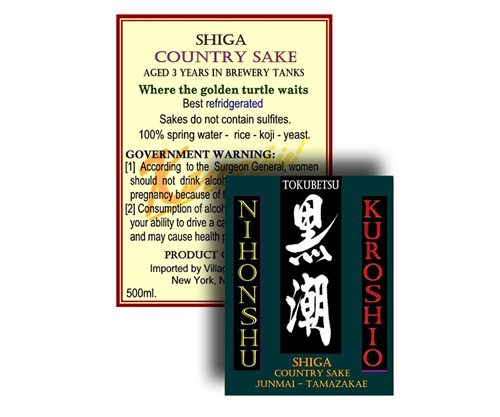
TTB classifies sake as a wine, for label purposes. Most wines have sulfites — but sake appears to be a notable exception. On the Shiga Sake label above, Village Wine reports that “Sakes do not contain sulfites.” TTB does not seem to disagree and has approved many such labels. Another sake importer, Vine Connections, concurs and reports that “Premium sake is gluten-free, sulfite free, and kosher.”
Continue Reading Leave a CommentTags: ingredients, policy
Where is Napa?

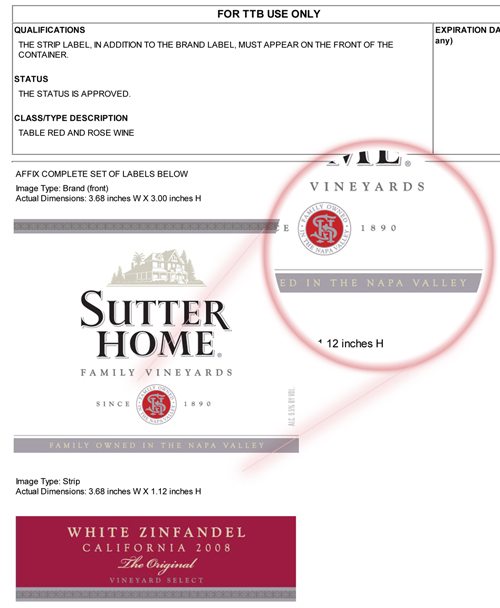
This looks like a straightforward label, but it raises some good issues. “Napa” is on the “brand (front)” label. Should it be? On the one hand, it looks to be bottled in the Napa Valley. On the other hand, the appellation is California more broadly, as per box 14 of the label approval. The label mentions Napa three times, attesting to its obvious importance as a signal of quality. Each reference to Napa tends to be accompanied by a clarifying explanation. One says it’s bottled there, two say the brand’s ownership is there. None of them (explicitly or by omission) suggest the grapes were grown there. TTB has approved quite a few labels presenting the same issues, and they may show a shift in policy, compared to five or ten years ago. It is our understanding that some wineries were blocked from highlighting Napa, regardless of the location of the bottling winery, if the grapes were from elsewhere. The same label raises one more good (but rather technical) issue. The brand name and alcohol content statement are on one piece of paper. The varietal and appellation are on another. The rules require all four items to be on the brand label. Sometimes, TTB requires all four items on the same piece of paper, sometimes in the...
Continue Reading Leave a CommentVegetable Wine

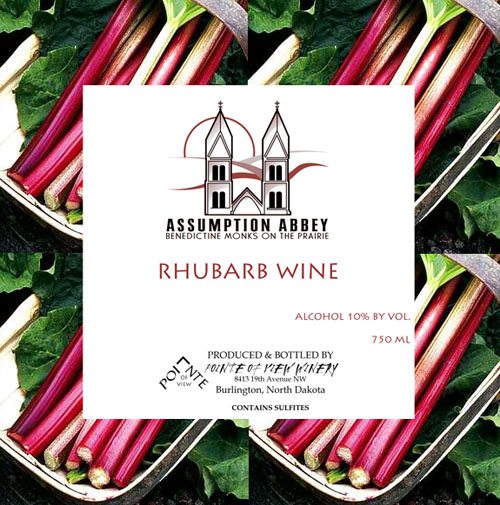
Earlier this week we covered kiwi wine. Today, we go further from grape wine, toward vegetable wine. Rhubarb wine to be exact. Rhubarbinfo.com says it’s a vegetable and on this I will tentatively defer to them. Assumption Abbey Rhubarb Wine is made by Pointe of View Winery in Burlington, North Dakota. The TTB database has many rhubarb wines, and they tend to be made in states not well known for grape wine, such as Kansas, Iowa, Illinois, and Indiana. None of these labels tend to show an appellation of origin or a vintage date. In a good article about non-grape wine, the San Francisco Chronicle explains:
[TTB] allows fruit wine makers to add sugar, acid and water as needed – natural flavors and colors are even allowed – but they don’t allow a fruit wine to bear a vintage or place-name the way a grape wine does.
“I think it’s a waste to not allow vintage dating,” says Koehler. “You have good and bad years for fruit, just like you do for grapes.”
Continue Reading Leave a CommentThose laws aren’t likely to change, if only because of the effort required by the TTB to police them. What does vintage mean to Tedeschi Vineyards when pineapple is available year-round? What does place-name mean...
Tags: ingredients, policy
Milk from Dragons, Grapes and Devils

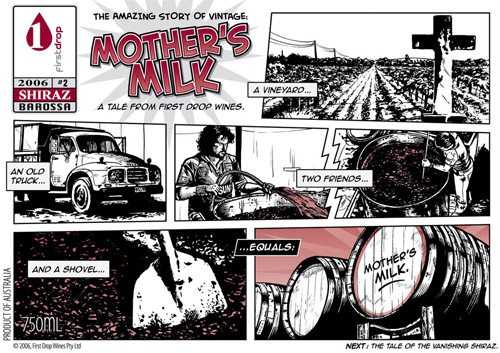
In many areas, TTB is fairly literal-minded. For example, if you are bound and determined to mention energy on your label, you are unlikely to get very far, without much regard to context, as in this example. Likewise, good luck if you want to use the term “organic” on anything not in line with the organic rules. In other areas, though, TTB will view a term much less literally. Mother’s Milk Shiraz is one such example. As best I can tell, it contains no milk. There is a recognition that the term is not to be taken seriously, even though it is quite possible to make a wide variety of alcohol beverages with and from real milk. This vodka distilled from milk is but one example. If you gave up Mother’s Milk before third grade, you may prefer Dragon’s Milk. Another alternative is Devil’s Milk. Even without ingredient labeling I am reasonably sure that the Devil contributed no milk whatsoever to DuClaw’s ale.
Continue Reading Leave a CommentTags: organic/vegan/green, policy, sin, wholesome