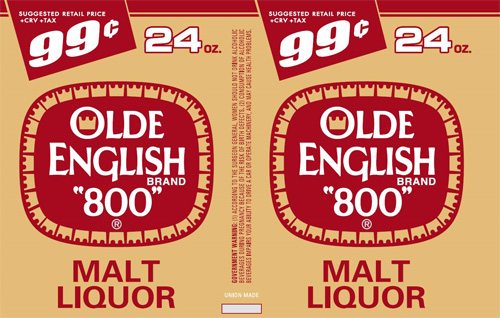
Does anyone else thinks that’s a lot of beer for just a dollar? It’s twice the size of a typical 12 ounce can, and if it’s anywhere close to 8% alc./vol. it’s twice again. So it’s the equivalent of four beers, at something like a quarter apiece. Is this normal, or a sign of the rough economy? We also wanted to post this because it’s a rare label that posts the price right on the permanent package. And somehow we think it will not be long until essentially all alcohol beverage labels post the alcohol content, in a clear way, and this does not.
Continue Reading Leave a Commentpolicy
Shelton Brothers Comment; Top 5 Things to Know

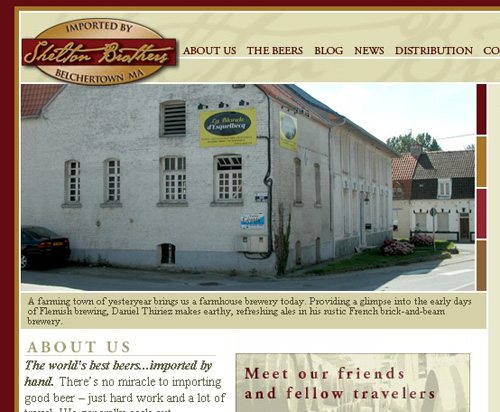
It is likely that all beer, wine and spirits labels will change dramatically in the near future. TTB has been working on new rules since CSPI and other groups submitted a petition in 2003. The new rules would require a “Serving Facts” panel on every container. This panel would include a lot more information, such as the typical serving size, number of servings per container, calories, carbohydrates, protein and fat. Because this is a big, controversial change, TTB has received more than 18,000 public comments during the past few years. There are far too many comments for most people to review, and so we will highlight and summarize the most noteworthy comments here. The most recent proposal and comments are here. This is comment 11 in a series; to see others, click on the “serving facts” tag below. Shelton Brothers is a specialty beer importer with a focus on small batch, hand-crafted beers from around the world. Shelton’s 13-page comment strayed a bit from time to time and said:
- Beer accounts for 51% of alcohol beverage sales.
- TTB has wide authority to require various label statements, but constrained authority to prohibit statements. “TTB does not have the authority to restrict protected speech that does not mislead consumers [and if this rule is finalized] no language relating...
Tags: policy, serving facts/allergens
Serving Facts on Bacardi Island Breeze

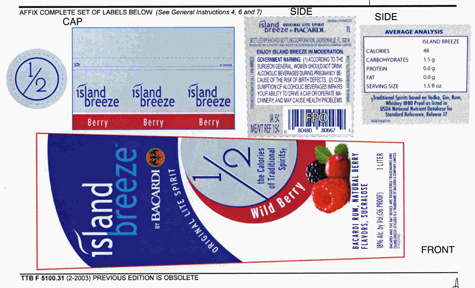
This Bacardi Island Breeze label blew in with a bang, in late 2005, and blew out quickly thereafter. Bacardi apparently had big plans for this “lite spirit.” The company booked Kim Cattrall for print and TV ads. But just a few years later, there is almost no trace of this brand or the ads. This label remains significant because it is one of the very few that refers to a Serving Size of 1.5 fluid ounces, and the “USDA National Nutrient Database.” TTB is moving toward requiring this information, in an expanded way, on all alcohol beverage labels. Diageo has pointed to this label and grumbled that it should be allowed to do something similar, too. This product is also one of very few using sucralose as a sweetener.
Continue Reading Leave a CommentTags: ingredients, legally interesting/controversial, policy, serving facts/allergens
Gallo Beware?

I am pleased to share a guest post, from Paul Jorgensen. Paul is an attorney in Washington, D.C.
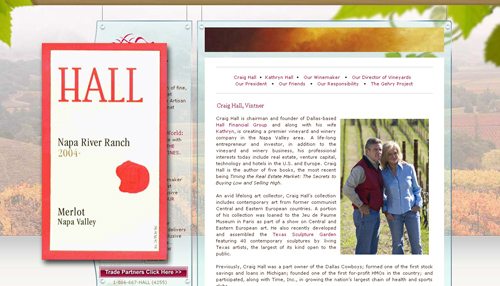
For readers thinking of registering a surname as a trademark for their beverage, please consider a recent case by the judicial branch of the U.S. Patent and Trademark Office (PTO), the Trademark Trial and Appeal Board (TTAB). According to In re Hall Wines, Serial No. 78926151 (February 10, 2009), anything that looks like a surname in your mark must be, above all, unique. The PTO usually refuses marks that are surnames, reasoning that if the PTO grants registration to that name, others may be unfairly stopped from using their name on their business, products or services. Since distillers and wineries often think of branding their products with family names, famous names, or names of well-known craftsmen, the resulting marks are frequently refused. So distillers and wineries should have a clear understanding of how the PTO will review their proposed mark. If the PTO thinks your application contains a surname, they will put the proposed mark through four tests, often referred to as Benthin factors after a case with the same name (In re Benthin Management GmbH, 37 USPQ2d 1332, 1334 (TTAB 1995)):
- How rare is the surname? The PTO will research this or...
Tags: legally interesting/controversial, policy, trademarks-beverage
Brewers Association Comment; Top 5 Things to Know

It is likely that all beer, wine and spirits labels will change dramatically in the near future. TTB has been working on new rules since CSPI and other groups submitted a petition in 2003. The new rules would require a “Serving Facts” panel on every container. This panel would include a lot more information, such as the typical serving size, number of servings per container, calories, carbohydrates, protein and fat. Because this is a big, controversial change, TTB has received more than 18,000 public comments during the past few years. There are far too many comments for most people to review, and so we will highlight and summarize the most noteworthy comments here. The most recent proposal and comments are here. This is comment 10 in a series; to see others, click on the “serving facts” tag below. The Brewers Association represents about 1,400 small brewers across the US. The Association’s 29-page comment said:
- Compliance will be expensive and lead to fewer products in the market.
- A 12 ounce serving size makes sense for normal beer, but modern brewing “allows for malt beverages to be fermented over 27% ABV” and for those over 20%, a reasonable serving size would be just 2 ounces.
- 100% of small breweries will be affected by the proposed rule and 38% said...
Tags: policy, serving facts/allergens
Pernod Absinthe

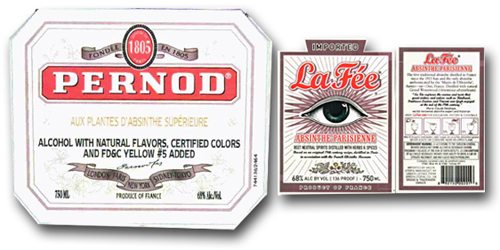
Here (above) is the COLA for Pernod Absinthe, at long last. It was extremely difficult to find, in TTB records, and a lot of absinthe enthusiasts have been looking for the COLA for upwards of a year. For example, Alan Moss’ Real Absinthe Blog does a great job tracking all the US-approved absinthes, but he too was not finding the approval. As of today his blog says “Pernod Aux Extraits de l’Absinthe: announced … for July 2008 launch. … Where is the label approval?” We think it’s fairly interesting that the Pernod label, for some reason, lists CERTIFIED COLORS AND FD&C YELLOW #5 in big text on the front label. But the comparable La Fee absinthe shows “caramel color & certified colors FD&C Blue #1 & FD&C Yellow #5” in much smaller text, on the back label.
Continue Reading Leave a CommentTags: policy, statement of composition, type


