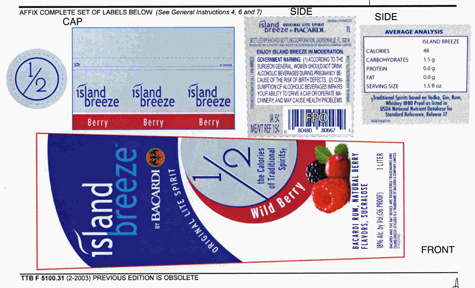
This Bacardi Island Breeze label blew in with a bang, in late 2005, and blew out quickly thereafter. Bacardi apparently had big plans for this “lite spirit.” The company booked Kim Cattrall for print and TV ads. But just a few years later, there is almost no trace of this brand or the ads. This label remains significant because it is one of the very few that refers to a Serving Size of 1.5 fluid ounces, and the “USDA National Nutrient Database.” TTB is moving toward requiring this information, in an expanded way, on all alcohol beverage labels. Diageo has pointed to this label and grumbled that it should be allowed to do something similar, too. This product is also one of very few using sucralose as a sweetener.
Continue Reading Leave a Commentlegally interesting/controversial
Serving Facts on Bacardi Island Breeze

Tags: ingredients, legally interesting/controversial, policy, serving facts/allergens
Gallo Beware?

I am pleased to share a guest post, from Paul Jorgensen. Paul is an attorney in Washington, D.C.
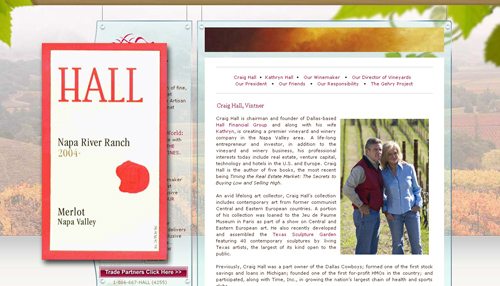
For readers thinking of registering a surname as a trademark for their beverage, please consider a recent case by the judicial branch of the U.S. Patent and Trademark Office (PTO), the Trademark Trial and Appeal Board (TTAB). According to In re Hall Wines, Serial No. 78926151 (February 10, 2009), anything that looks like a surname in your mark must be, above all, unique. The PTO usually refuses marks that are surnames, reasoning that if the PTO grants registration to that name, others may be unfairly stopped from using their name on their business, products or services. Since distillers and wineries often think of branding their products with family names, famous names, or names of well-known craftsmen, the resulting marks are frequently refused. So distillers and wineries should have a clear understanding of how the PTO will review their proposed mark. If the PTO thinks your application contains a surname, they will put the proposed mark through four tests, often referred to as Benthin factors after a case with the same name (In re Benthin Management GmbH, 37 USPQ2d 1332, 1334 (TTAB 1995)):
- How rare is the surname? The PTO will research this or...
Tags: legally interesting/controversial, policy, trademarks-beverage
Zubrowka

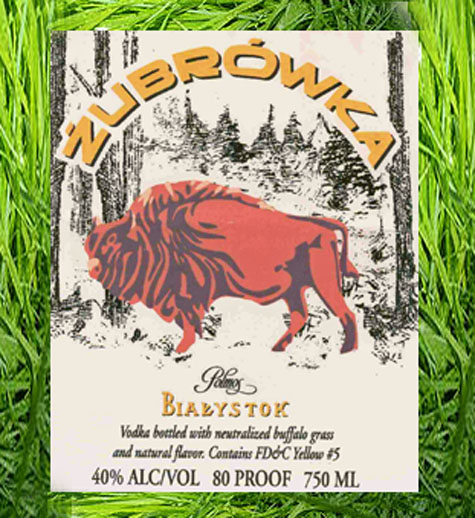
An anonymous reader wrote to us about this Zubrowka label as follows:
Free Range Vodka? As if there weren’t already enough confusion with health food terms like organic, natural, cage-free, and free-range, we’ve found a product that extends the health craze to alcoholic beverages. Meet Zubrowka, bottled with “neutralized” buffalo grass. What exactly is neutralized buffalo grass? Well, your guess is as good as ours. But if one were to assume that by neutralizing it, it is rendered somewhat inactive or less potent, that begs the question, why bother adding the ingredient in the first place? So, the purpose of adding a neutralized ingredient is definitely curious, but the label’s image may give us some clues. The image of a large, muscular, and almost fearsome bison dominates the label. One could assume the message here is that by ingesting the very essence of what these imposing creatures thrive on, the drinker would too be infused with virility and strength.
In fact, there is a good reason it’s neutralized. Real bisongrass raises serious health concerns as suggested by Bill Dowd here. Zubrowka is native to Poland and goes back at least 500 years.
Continue Reading Leave a CommentObama: Where the Line is Drawn

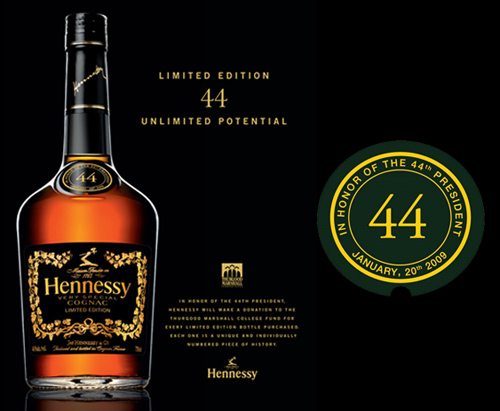
We wrote about President Obama’s appearance, on a beer label, many weeks ago. So we were going to leave the above label alone. But the Hennessy label has received surprisingly little press attention, and a reader reminded us about it. The Hennessy label provides a vivid illustration of where the line is drawn, in the matter of Obama-alcohol-beverage-labeling, and how to do it right and wrong. Hennessy got it right, apparently, by avoiding any direct reference to Mr. Obama (by way of name or likeness). They went right up to the line but did not cross it. By contrast, as to the beer, Jill Jaracz wrote in to say:
Continue Reading Leave a CommentAmid all the hoopla over the Presidential Inauguration, the TTB has officially nixed the idea of putting President Obama’s name and likeness on beverage labels by denying Ommegang Brewery’s application for a single-batch ale called Obamagang that they planned to release around Inauguration Day. TTB denied this label because they do not allow commercial use of someone’s name or likeness without that person’s permission. In order to comply with the law, the Cooperstown, NY-based Ommegang chose to rename their product Ale 2009, and the new approved keg label depicts that the beer was created in honor of the Inauguration. However, Ommegang’s website still flaunts the ruling...
Tags: famous, legally interesting/controversial, policy, political, speech
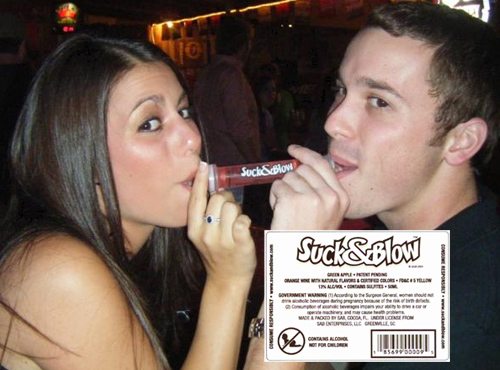
Suck & Blow

Here is Suck & Blow. It is orange wine with natural flavors. But somehow we don’t think people are buying this mainly for the fine wine. It looks like fun. It is one of only a few “interactive” beverages. The producer describes it as:
the only interactive jello shooter that turns an ordinary shot experience into something sexy, fun and extraordinary. It’s the unique method of delivery that drives everyone wild and creates an exciting new way for people to drink and meet. It’s perfect for livening up a party, energizing a bar and creating an atmosphere of fun and enjoyment. Drinking shots will never be the same.
TTB first approved this in 2004, when it was spirits-based. TTB insisted that the container must include the “not for children” icon. The brand is owned by a couple of blokes in South Carolina, and the product is bottled by Mango Bottling of Cocoa, Florida.
Continue Reading Leave a CommentTags: container, functional, legally interesting/controversial, non-liquid, risqué
Champagne Battle Spills into Time Magazine

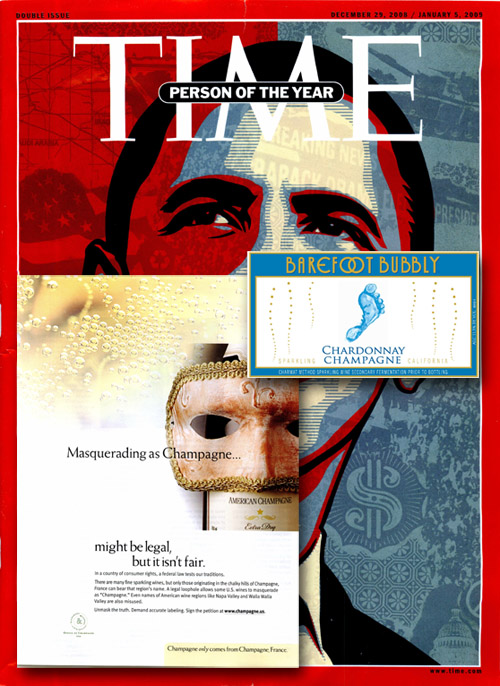
We never thought we’d see a TTB controversy make it into a big ad in the national media — let alone a full page ad in Time Magazine. The yellow ad is on page 69 of the December 29, 2008 “Person of the Year” double issue and it covers the entire page. The French Office of Champagne is not at all pleased that some non-French wines qualify to be called Champagne, under US law. The ad says “Masquerading as Champagne … isn’t fair. … A legal loophole allows” some names to be misused. In 2006, after many years of negotiations between the US and the European Union, and agreement, TTB set forth the current US rule in TTB Industry Circular 2006-1:
Continue Reading Leave a Commentthe U.S. made a commitment to seek to change the legal status of [terms like Champagne] to restrict their use solely to wines originating in the applicable EU member state, with certain exceptions. Because the IRC specifically defines semi-generic names, this law must be changed in order to restrict the usage of the names to wines originating in the EU. Assuming the law is so changed, the Agreement contains an exception to this rule. We refer to this exception as the “grandfather” provision. Under the “grandfather” provision, any person or his or her successor...
Tags: ad, business strategy, international, legally interesting/controversial, origin, policy

