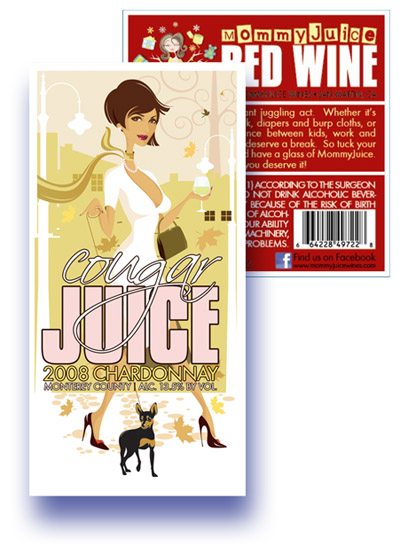
Clos Lachance has two fairly new wines. CougarJuice and MommyJuice. In the matter of lusty cougars, Peyton Imports was fairly early, with the Urban Cougar. Perhaps she is real, what with this site exhorting over a million members to: “Join CougarLife.com and meet great young guys before they’re snatched up.” Foreshadowing that this theme may be over-ripe, or ripe for a trademark lawsuit, Cougar Juice Vodka slinked into the bar a few months ago. The MommyJuice label also happens to mention Facebook on the back label, prompting TTB to assert that “Information on Facebook and/or Twitter must be in compliance with all labeling and advertising regulations.”
Continue Reading Leave a Commentpolicy
Sen. Schumer Says Labels Take Too Long
Sen. Charles Schumer spoke at a Finger Lakes winery late last week and said many wine labels take too long to get approved. He was especially concerned about labels submitted to TTB by New York’s more than 300 wineries. MPNnow.com reported:
the delays — sometimes up to three months — result in wineries not being able to market their wines. The Washington, D.C., agency’s staff has been shaved by budget cutbacks over the last decade while the tide of label-approval applications from wineries nationwide almost doubled from 69,000 in 1999 to 132,500 in 2010, said spokesman Tom Hogue. “And that doesn’t take into account any of the time going back and forth with applicants to make sure labels they’ve submitted actually meet the legal requirements,” Hogue said.
John Martini, co-owner of Anthony Road Wine Co. said:
label approval used to take a week. One label he submitted online May 12 was approved June 15, but he said he has heard horror stories of approvals taking 75 to 90 days. He said new wineries often have long delays because their labels don’t meet the specifics of the label law, which was approved after Prohibition ended. However, he said, “Every winery has a goofy TTB label story.”
The Senator’s press release, and letter to TTB, are
The Official Spirit

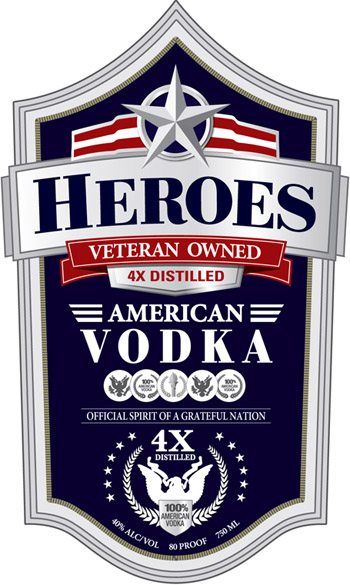
How quickly times and lines continue to change and move. Just two years ago, these various military-themed labels were considered by many to be tacky. In the absence of much uproar, and with plenty of military activities since then, the march of military-themed alcohol beverages continues apace. Heroes brand vodka claims to be Veteran Owned, all American, four times distilled — and most startling — “Official Spirit of a Grateful Nation.” The brand is owned by Travis McVey, a U.S. Marine from 1989-1992. During the past few years, McVey teamed up with Lipman Brothers and Buffalo Trace (bottler):
Continue Reading Leave a CommentIn 2009, Heroes LLC came to fruition when Travis contacted Robert S. Lipman – a beverage alcohol industry veteran – with a business plan for introducing a hand-crafted vodka to all of the active duty military and Veterans as well as civilians throughout the United States. He anticipated the vodka being made in America with distribution to over 6,000 military bases, 6,000 VFW posts, and 12,000 American Legions posts. When Travis presented his Heroes Vodka proposal … Lipman was intrigued. The successful entrepreneur,whose family established Lipman Brothers in 1939, has been sitting at the helm of the oldest distributor of wine and spirits in Tennessee for nearly 25 years. Hundreds of pitches pass...
snoBaR Ice Cream

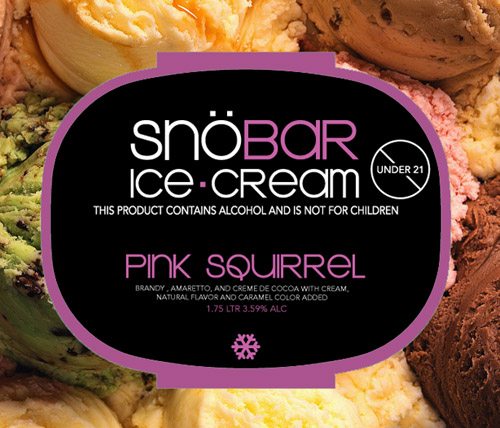
About two years ago we showed spirits in the form of whipped cream. Last year we showed spirits in the form of an ice pop (more commonly known as a popsicle). Just last week we showed various chocolate wines, to underscore the movement toward “The Dessertification of Beverages.” Nathan added a comment, asking how long until a convergence between spirits and ice cream. Within the same week, TTB approved a line of ice cream products, with about as much alcohol content as a light beer. snoBaR is made by Brothers International Desserts, of Irvine, California. Brothers seems to be mainly an ice cream company, more than a spirits company. So far, Brothers has approvals for Pink Squirrel (with brandy and amaretto, as above), Grasshopper (with brandy and creme de menthe), and Brandy Alexander (with brandy and creme de cocoa). All of them are about 4% alc./vol. — a fair amount more than the rum raisin ice creams of an earlier era. Baskin-Robbins tends to suggest that their Rum Raisin is made with little if any rum, while Häagen-Dazs suggests that at least a little rum is used.
Continue Reading Leave a CommentTags: dairy, non-liquid, policy
TTB Products from Majority Muslim Countries

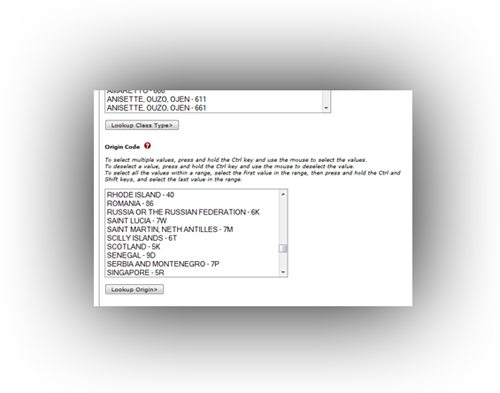
I can find plenty of alcohol beverages made in Romania, for example, from the above lookup at TTB’s website. But I can’t find anything from Saudi Arabia. Oh yes, it’s easy to say that Saudi Arabia is a major, majority-Muslim country and so I should not expect to find a single drop of alcohol beverages flowing out from or in to that country. Wikipedia says no less than 100% of the population is Muslim. On the other hand, Turkey has far more Muslims, at 99% of the population — and no less than 370 label approvals in the TTB database. A recent wine approval is here. Indonesia has more Muslims than any other country and also has about 25 label approvals in the database. Here is Panther Beer. Algeria has at least a few approvals. A wine example is here. Morocco has a few hundred approvals, with a recent wine example here. Egypt has a code, but I don’t see any approvals. Rounding out the top 14 Muslim countries, the following countries (in addition to Saudi Arabia) do not even have a TTB lookup code: Afghanistan, Bangladesh, Iran, Iraq, Malaysia, Pakistan, Sudan. Some of these countries are so strict that not even soy sauce or vanilla extract is tolerated.
Continue Reading Leave a CommentNapa Vodka

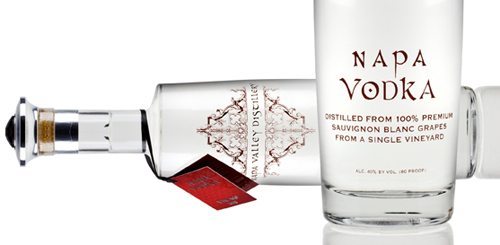
It doesn’t go quite as far as Roth Vodka, which mentions something like a vintage date. But in some ways, Napa Vodka goes further — because it refers to the specific grape varietal and the vaunted Napa origin — rather than just California more generally. Wines & Vines explains:
The vodka was made from 2008 grapes harvested from a single vineyard in Napa Valley and fermented into wine, then distilled in a Vendome copper pot still at Stillwater Spirits in Petaluma, Calif. … It takes nearly 2 tons of grapes to produce the 3,000 gallons of wine needed to make 300 gallons of high-proof spirits, which are then diluted to 500 gallons. … While there appears to be no legal requirement, [owner Arthur] Hartunian secured approval from the Napa Valley Vintners and Napa Valley Grapegrowers for his project.
It sells for about $75 per bottle, and the Napa, California distillery produced only about 2,600 bottles.
Continue Reading Leave a Comment

